
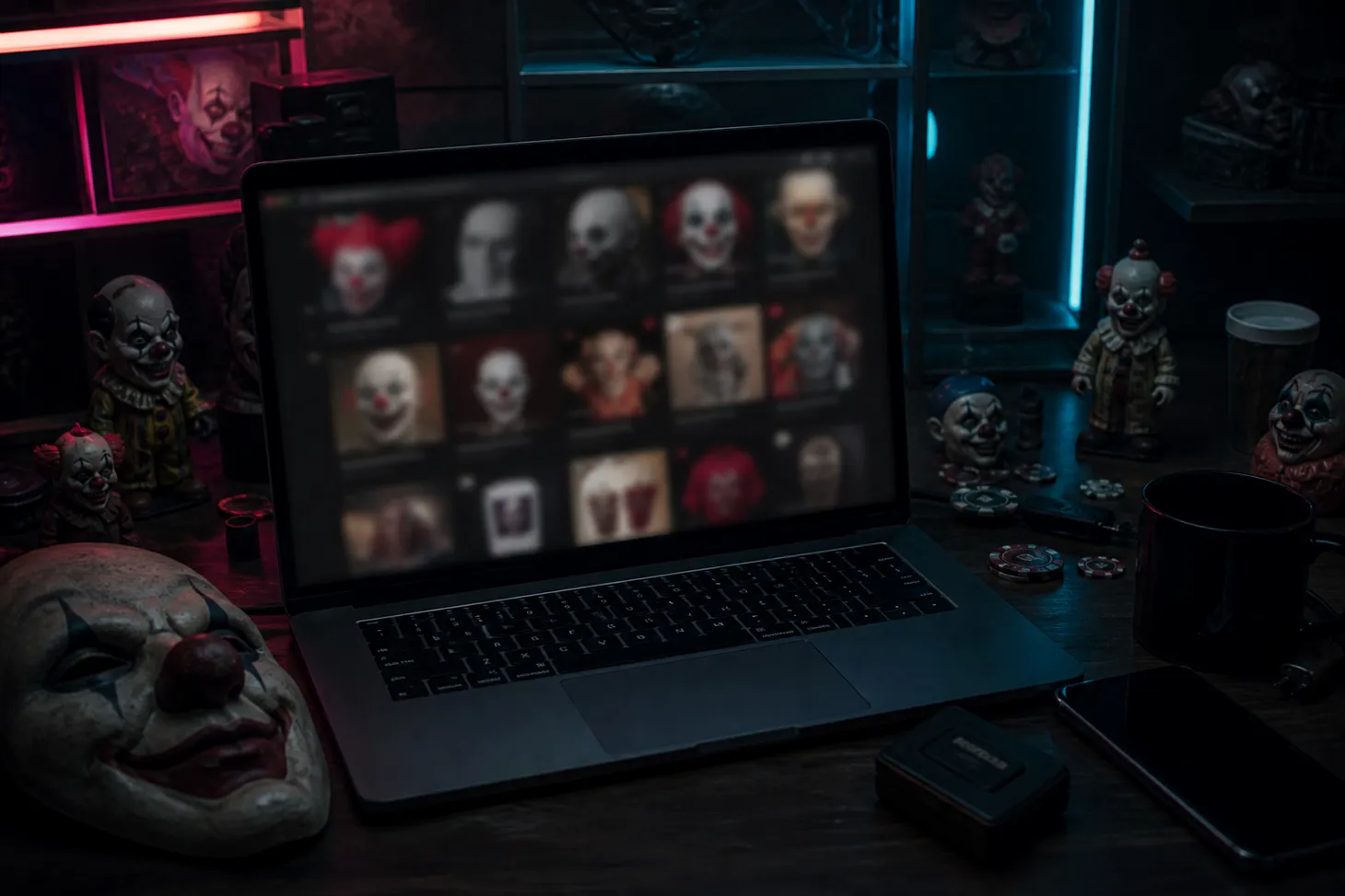
‘Deep web payasos’ is a YouTube and TikTok horror-fiction trend, not a real dark web category. The phrase comes from Spanish-language videos by creators like Fede Vigevani, whose 220 videos about ‘deep web clowns’ are scripted immersive stories, not documented events[1]. The dark web itself is real: it means encrypted services, mostly on Tor, that standard browsers and search engines cannot reach[2][3]. No evidence links these clown videos to actual onion services.
What 'Deep Web Payasos' Actually Refers To
'Deep web payasos' is not a marketplace, forum, or organized group on the dark web. It is a Spanish-language content genre that mixes fictional horror storytelling with dark web branding. The phrase translates to 'deep web clowns,' and it describes scripted videos where creators pretend to encounter supernatural clowns supposedly hired or summoned from hidden internet services.
The trend centers on immersive horror narratives. Fede Vigevani, a prominent creator in this space, has published 220 videos featuring 'deep web clowns'[1]. In his first video, he and his friends claim they will 'rent a clown from that dangerous place on the internet'[1]. These productions are labeled 'cine' (cinema) by his audience, signaling that viewers understand them as entertainment rather than documentation[1].
Real dark web content exists on encrypted networks like Tor and I2P[2][3]. Onion services—websites with addresses ending in .onion—run on Tor, hiding their operators' locations and IP addresses[4]. Actual dark web categories include marketplaces for stolen data, forums for political dissidents, and encrypted communication tools[3]. None of these networks host clown-rental services or supernatural entities.
The confusion arises because the videos use real dark web terminology. Creators reference Tor, .onion addresses, and 'deep web' access, then layer fictional clowns on top. This combination makes the content feel plausible to viewers unfamiliar with how onion services work. The dark web's reputation for anonymity and hidden activity provides a ready-made setting for horror fiction, even though the stories themselves have no basis in documented dark web activity.
You will not find 'payasos' listings on Tor or I2P. The phrase describes a surface-web entertainment trend that borrows dark web aesthetics for narrative effect. Understanding this distinction helps you separate viral fiction from the real risks and legitimate uses of encrypted networks Difference Between Deep Web and Dark Web: Explained.
Where the Trend Comes From: Fede Vigevani and the Mini Mini Clown
The 'deep web payasos' trend began with Uruguayan YouTuber Fede Vigevani and his recurring character, the Mini Mini clown. Vigevani produces horror-comedy videos in which he and his friends claim to summon or hire clowns from the dark web, then film scripted encounters with actors in clown makeup. His channel has published 220 videos featuring these 'deep web clowns,' making the series one of the most-watched Spanish-language horror formats on YouTube[1].
In the first Mini Mini video, Vigevani explains that the group will attempt to 'rent a clown from that dangerous place on the internet'[1]. The videos follow a formula: the creator navigates a mock dark web interface, places an 'order,' and waits for the clown to arrive. The clown then appears in real-world settings—homes, parks, abandoned buildings—where it chases or pranks the group. Vigevani's audience refers to these productions as 'cine' (cinema), a term that signals the content is immersive storytelling rather than real events[1].
Other creators adopted the format. Din Don Payaso, another Spanish-language channel, produces similar clown-themed horror skits with transformation sequences and jump scares. These videos rely on horror-comedy tropes: creepy music, night-vision footage, exaggerated reactions, and cliffhanger endings that encourage viewers to watch the next episode. The format works because it combines the dark web's real reputation for anonymity with the fictional threat of supernatural clowns.
None of these videos document actual dark web activity. Tor onion services do not host clown-rental marketplaces, and no verified reports describe clown-related content on I2P or Freenet[4][2]. The creators use real dark web terminology—Tor, .onion, 'deep web'—to build a plausible setting, but the clowns themselves are actors following scripts. The trend is entertainment, not evidence.
The Creepypasta Layer: Clown Sightings, 'Rental' Stories, and Urban Legend
The 'deep web payasos' trend did not appear in a vacuum. It draws from two older sources: the 2016 creepy clown panic and decades of internet creepypasta. Both provided narrative templates that Spanish-language creators adapted for YouTube horror fiction. Recognizing these patterns helps you distinguish viral storytelling from documented events.
The 2016 Clown Sightings
In August 2016, residents of Greenville County, South Carolina, reported people in clown makeup near apartment complexes, allegedly trying to lure children into woods[5]. A police report from 21 August described a 'suspicious character dressed in circus clown attire and white face paint, enticing kids to follow him/her into the woods'[6]. Deputies investigated but found no evidence—no surveillance footage, no physical traces, no witnesses who had directly interacted with the clowns[6]. Greenville County Sheriff's Office spokesman Ryan Flood stated that no officer investigating the claims had seen a single clown, and he described the incidents as 'isolated incidents that have not been confirmed'[7].
The reports spread nationwide, fueled by social media and local news coverage. The panic lasted through autumn 2016, with similar unverified sightings in other states. No arrests were made, and no clown-related crimes were substantiated. The episode became a case study in how fear and rumor amplify through digital networks, even when evidence is absent.
This event gave creators a real-world reference point. Videos about 'deep web clowns' often mirror the 2016 panic: clowns appear near homes, chase people at night, and vanish without a trace. The difference is that the YouTube videos are scripted fiction, while the 2016 reports were genuine fear responses to unconfirmed stimuli.
Creepypasta Tropes: 'Clown Rental' and Cursed Media
Creepypasta is a genre of user-generated horror fiction distributed through forums, image boards, and social media. Common tropes include first-person narration, 'found footage' framing, cursed objects, and entities summoned from hidden corners of the internet. The 'deep web payasos' trend borrows all of these.
The 'clown rental' story is a recurring creepypasta motif. In these narratives, a protagonist discovers a dark web service offering to send a clown to any address. The clown arrives, behaves in increasingly disturbing ways, and cannot be dismissed or controlled. The story ends with the protagonist trapped, injured, or missing. These tales follow a predictable structure:
First-person horror: 'I found a .onion link that said "Rent a Clown"—I thought it was a joke.'
Unverifiable claims: 'The website disappeared after I placed the order.'
Escalating dread: 'The clown knows things about me it shouldn't know.'
Lost media framing: 'I recorded everything, but the files corrupted.'
A PDF titled 'Clownsrental' circulates on Reddit and horror forums. It presents itself as a leaked document from a dark web service, complete with fake onion addresses and pricing tables. The document is fan-made fiction—no corresponding onion service exists, and the addresses in the PDF resolve to nothing when tested on Tor[4]. The PDF's purpose is entertainment, not documentation, but readers unfamiliar with how onion addresses work may mistake it for evidence.
How to Recognize the Pattern
You can identify creepypasta-derived content by checking for these markers:
No verifiable sources: The story cites 'a friend,' 'someone online,' or 'a deleted forum post,' never a named person or archived page.
Convenient technical failures: Cameras malfunction, files corrupt, or witnesses refuse to speak—always at the moment proof would appear.
Supernatural escalation: What begins as a prank or dare ends with unexplained phenomena that defy documentation.
Call to action: 'Don't try this yourself' or 'I'm posting this as a warning'—phrases designed to heighten the story's perceived authenticity.
Real dark web services, whether legitimate or criminal, operate within technical and economic constraints. Onion services require server infrastructure, payment systems, and operational security[4]. A marketplace selling illegal services would prioritize anonymity and profit, not theatrical horror. The 'clown rental' narrative ignores these realities because its goal is storytelling, not plausibility.
The 'deep web payasos' trend succeeds because it layers these creepypasta tropes onto real dark web terminology. Creators reference Tor, .onion addresses, and encrypted networks, then add fictional clowns that behave like horror-movie antagonists. The result feels plausible to viewers who know the dark web exists but have never used it. Recognizing the narrative formula—first-person dread, unverifiable claims, lost evidence—lets you separate fiction from the documented risks of encrypted networks.
What the Dark Web Actually Contains (And What It Doesn't)
The dark web is a collection of websites and services that run on encrypted overlay networks—primarily Tor, with smaller networks like I2P and Freenet[2]. These networks require specific software to access and are designed to hide the location and IP address of both operators and users[4][3]. You cannot reach dark web sites through Chrome, Firefox, or any standard browser without additional tools. You will not find them on Google, Bing, or other search engines, because they exist outside the indexed surface web.
Onion services are the most common dark web technology. These are websites with addresses ending in .onion, accessible only through the Tor Browser[4]. The address is automatically generated, and all traffic between Tor users and onion services is encrypted end-to-end[4][2]. This design makes it difficult to censor the sites or identify their operators, which is why the dark web hosts both legitimate and illegal activity[3].
Documented Dark Web Content Categories
Real dark web services fall into several broad categories:
Marketplaces for stolen data: Sites selling credit card numbers, login credentials, and personal information harvested from data breaches.
Forums and communication platforms: Encrypted discussion boards used by political dissidents, journalists, and activists in countries with heavy censorship.
Whistleblower platforms: Services like SecureDrop, which allow sources to submit documents to news organizations anonymously.
Illegal marketplaces: Sites selling drugs, counterfeit documents, and hacking tools—these are the services most often covered in law enforcement reports.
Cryptocurrency services: Mixers, tumblers, and exchanges designed to obscure the origin of digital payments.
Each of these categories exists because Tor and I2P provide anonymity[4][2]. The technology itself is neutral—it hides your location and activity, which benefits both human rights workers and criminals. The dark web's reputation stems from high-profile criminal marketplaces, but the network also supports legitimate privacy needs[3].
What the Dark Web Does Not Contain
'Clown sites' or 'payaso sites' are not a documented dark web category. No law enforcement report, academic study, or verified investigation has described onion services dedicated to clown-related content. The phrase 'deep web payasos' is a surface-web meme, originating from YouTube horror fiction rather than any activity on Tor or I2P[1].
You will not find services offering to 'rent a clown' or 'summon a clown' on .onion addresses. Real dark web marketplaces prioritize operational security, payment processing, and avoiding law enforcement attention. A service built around theatrical horror—actors in clown makeup arriving at physical addresses—would require coordination, logistics, and exposure that contradict the anonymity goals of encrypted networks[4]. The 'clown rental' narrative is a creepypasta trope, not a business model that exists on Tor Difference Between Deep Web and Dark Web: Explained.
The confusion arises because YouTube creators use real dark web terminology in their videos. They reference Tor, .onion addresses, and 'deep web access,' then layer fictional clowns on top[1]. This combination makes the content feel plausible to viewers who know the dark web exists but have never used it. The dark web's reputation for hidden activity provides a ready-made setting for horror fiction, even though the stories themselves have no basis in documented onion services.
If you search for 'payasos' or 'clown' on Tor, you will find nothing relevant. The phrase describes a Spanish-language entertainment trend, not a category of dark web content. Understanding this distinction helps you separate viral fiction from the real risks and legitimate uses of encrypted networks.
Real Risks That Get Confused With the Payasos Myth
The 'deep web payasos' trend is fictional, but the behaviors it encourages expose you to documented threats. Searching for 'deep web payasos gratis,' clicking unverified links in video descriptions, and downloading files labeled 'dark web browser' create opportunities for phishing, malware infection, and scams. These risks are real, measurable, and tied directly to how the trend spreads.
Phishing Links Disguised as 'Deep Web Access'
Video descriptions and comment sections often contain links claiming to provide 'access to the deep web' or 'payasos site links.' These URLs typically lead to phishing pages designed to harvest your email address, password, or payment information. The page may mimic a legitimate Tor download site or promise 'exclusive deep web content' in exchange for account credentials.
Phishing works because it exploits urgency and curiosity. A link labeled 'deep web payasos gratis—click here before it's deleted' mimics the scarcity tactics used in legitimate marketing, but the destination is a credential-harvesting form. If you enter your email and password on such a page, the operator gains access to any account where you reuse those credentials. The 'payasos' framing is bait; the goal is data theft.
You can identify phishing attempts by checking the URL before clicking. Legitimate Tor Browser downloads come only from torproject.org[4]. Any other domain offering 'Tor access' or 'deep web entry' is either a scam or a malware distributor. If a video description promises 'the real payasos link,' assume it is phishing unless you can verify the destination independently.
Malware Bundled With 'Dark Web Browser' Downloads
Some videos direct viewers to download modified versions of Tor Browser or standalone 'deep web browsers' that claim to unlock hidden content. These files often contain malware: keyloggers that record your keystrokes, ransomware that encrypts your files, or remote-access trojans that give attackers control of your device.
The official Tor Browser is open-source software maintained by the Tor Project, available exclusively at torproject.org[4]. Any file downloaded from a third-party site, file-sharing service, or video description is unverified and potentially dangerous. Malware authors exploit the dark web's mystique by branding their payloads as 'enhanced browsers' or 'deep web access tools.' The 'payasos' trend amplifies this risk because young audiences searching for the videos may lack experience recognizing malicious downloads.
If you have already downloaded a file from an unverified source, do not run it. Delete the file and scan your device with updated antivirus software. Real Tor Browser requires no special unlocking, no payment, and no 'activation codes'—any software demanding these is malware.
Scams Selling 'Access' to Fictional Content
Opportunistic scammers monitor trending searches and create services that promise what the trend describes. You may encounter websites, Telegram channels, or Discord servers offering 'deep web payasos videos' or 'clown site access' for a fee—typically cryptocurrency or gift cards. These are scams. The 'content' does not exist, and payment methods like cryptocurrency are irreversible Using Tor for the Deep Web: Essential Tips.
The scam follows a predictable structure: a landing page with ominous visuals, testimonials from 'satisfied users' (fabricated or stolen from unrelated contexts), and a payment form. After you pay, you receive either nothing or a link to publicly available horror videos repackaged as 'exclusive deep web content.' The scammer profits from the gap between what the trend promises and what actually exists on Tor[2][3].
No legitimate dark web service sells access to 'payasos' content because no such content exists[1]. If someone demands payment for it, they are exploiting your curiosity. Cryptocurrency transactions cannot be reversed, and gift cards are untraceable, so you have no recourse after paying.
Doxxing and Harassment in Forums
Some viewers, convinced the 'payasos' are real, post personal information in forums or comment sections while trying to 'investigate' the trend. This includes sharing their location, real name, or contact details in threads asking 'Has anyone seen the clowns in [city]?' or 'I'm going to search for the site tonight—wish me luck.' Malicious actors monitor these threads and use the information for doxxing: publishing your personal details publicly, often with intent to harass or intimidate.
Doxxing risk increases when you combine real identifying information with a trending topic. A comment like 'I live in Bristol and I'm searching for deep web payasos tonight' gives harassers your city, your interest in a vulnerable activity, and a timeframe. Even if you delete the comment later, archived copies may persist. The 'payasos' trend does not cause doxxing directly, but the behaviors it encourages—public speculation, oversharing in excitement—create exploitable data.
Protect yourself by separating your real identity from online curiosity. Do not post your location, school, workplace, or full name in threads about trending topics. If you want to discuss the 'payasos' trend, do so without revealing information that could identify you offline.
Why the Trend Amplifies These Risks
Each of these threats existed before 'deep web payasos' became a search term. Phishing, malware, scams, and doxxing are constant features of the internet. The trend amplifies them because it directs a large, young, and often inexperienced audience toward behaviors that attackers exploit: clicking unverified links, downloading files from untrusted sources, and sharing personal details in public forums.
The fictional premise—clowns hidden on the dark web—creates urgency and curiosity, which override caution. A viewer who would normally ignore a random download link may click it if the link promises 'proof' of the payasos. Scammers and malware distributors understand this dynamic and tailor their bait accordingly. The 'payasos' are not the risk. The risk is the ecosystem of opportunistic threats that cluster around any trending search term, especially one that combines mystery, fear, and the dark web's reputation.
How to Verify a 'Deep Web' Claim Before Sharing It
You can assess whether a 'deep web payasos' claim is credible by applying a simple checklist before you share it. Most viral claims fail basic verification because they rely on atmosphere rather than evidence. The steps below work for any 'deep web' story, not just clowns, and take less than five minutes.
Does the Claim Name a Specific .onion Address?
Real dark web services exist at .onion addresses—randomly generated strings of letters and numbers ending in .onion[4][2]. If a video or post describes a 'deep web clown site' but never provides the actual address, the claim is decorative. Content creators use 'deep web' as a mood rather than a verifiable location[1].
A genuine investigation of dark web activity includes the .onion URL, screenshots with visible address bars, and timestamps. The 2016 South Carolina clown sightings, for example, were investigated by the Greenville County Sheriff's Office, which documented reports, searched for evidence, and found none[6][7]. Law enforcement reports name locations, dates, and outcomes. Viral videos do not.
If the claim includes an .onion address, you can verify it independently by visiting the address through Tor Browser[4]. Do not do this unless you understand the legal and security risks of accessing dark web content. Most 'payasos' claims never reach this stage because no address exists to verify.
Is There Primary Documentation?
Primary documentation means evidence created at the time of the event: archived web pages, law enforcement reports, court filings, or screenshots with metadata. A claim supported only by reaction videos, commentary, or 'someone told me' chains is hearsay, not evidence.
For the 'deep web payasos' trend, no primary documentation exists. No police report describes clown-related onion services. No archived .onion page shows a 'clown rental' marketplace. No court case references such a service. The trend originated from Fede Vigevani's horror fiction series, which he and his audience describe as immersive stories rather than real events[1]. The videos are entertainment, clearly labeled as 'cine' by followers who understand the format.
When you encounter a claim, search for the primary source. If every result links back to YouTube videos or TikTok clips without underlying documentation, the claim is unverified. Legitimate dark web investigations cite specific sources: the Tor Project's technical documentation[4], academic research[2], or law enforcement press releases. Viral claims cite each other.
Does the Source Have a Monetization Incentive?
Content creators earn revenue from views, watch time, and engagement. A video titled 'I FOUND THE DEEP WEB CLOWNS (NOT CLICKBAIT)' generates more clicks than 'I Made a Horror Short About Fictional Clowns.' The incentive structure rewards exaggeration, urgency, and ambiguity about whether the content is real[1].
This does not mean all monetized content is false, but it does mean you should assess the creator's transparency. Does the video description clarify that the story is fiction? Does the creator respond to comments asking 'Is this real?' with honest answers, or do they encourage speculation? Fede Vigevani's audience understands his videos are immersive fiction because he frames them as stories[1]. Channels that blur this line intentionally are less trustworthy.
Check the creator's other videos. If every upload follows the same 'deep web mystery' format with similar stakes and no resolution, you are watching a content series, not investigative journalism. Real dark web reporting includes follow-up, corrections, and citations. Fiction does not.
Search Spanish-Language Fact-Checking Outlets
Because the 'deep web payasos' trend originated in Spanish-language YouTube, fact-checking coverage often appears in Spanish-language media first. Outlets like Maldita.es, Newtral, and Verificado have debunked similar 'deep web' hoaxes and provide context for how these trends spread.
A search for 'payasos deep web' in Spanish returns articles explaining that the trend is fiction, tracing it to Vigevani's videos and similar creators[1]. These articles cite the creators directly, interview media literacy experts, and clarify that no law enforcement agency has documented clown-related dark web services. English-language searches often return only the viral videos themselves, creating a feedback loop where the claim appears credible simply because it is repeated.
If you do not read Spanish, use a translation tool to review fact-checking articles. The key details—creator names, video titles, dates—translate clearly, and the conclusions are unambiguous. Fact-checkers have already done the verification work; you benefit from their research by checking their findings before sharing a claim Is the Deep Web Real? Debunking Myths.
Worked Example: A Typical 'Payaso Deep Web' Video Claim
A video titled 'We Rented a Clown From the Deep Web' shows a group of friends using Tor Browser, entering an unspecified .onion address, and later encountering someone in clown makeup at their home. The description includes a link labeled 'deep web access tool' and asks viewers to 'like and subscribe for part 2.'
Apply the checklist: Does the video show the .onion address? No—the address bar is blurred or cropped out. Is there primary documentation? No—the only evidence is the video itself, which could be staged. Does the creator have a monetization incentive? Yes—the video is monetized, the description includes affiliate links, and the cliffhanger ending encourages return views. Have fact-checkers addressed it? Yes—Spanish-language outlets have identified this format as fiction[1].
Conclusion: the video is entertainment, not documentation. Sharing it as evidence of real dark web activity spreads misinformation. If you enjoy the content, share it as fiction, not fact.
Why the Trend Matters: Anonymity Myths and Media Literacy
The 'deep web payasos' trend is fiction, but its impact on public understanding of digital privacy and risk is real. Four patterns explain why this trend persists and why debunking it matters to you.
'Deep Web' as a Marketing Label Inflates Perceived Danger
Creators attach 'deep web' to ordinary horror content because the label makes fiction feel forbidden. A video titled 'We Encountered a Clown' attracts casual viewers. The same video titled 'We Rented a Clown From the Deep Web' suggests hidden knowledge, danger, and exclusivity. The dark web's reputation for criminal marketplaces transfers to the content, even though the video has nothing to do with Tor or onion services[4][2].
This matters because it distorts your understanding of actual cyber risk. The dark web is a collection of privacy-focused networks like Tor, I2P, and Freenet, used for both legitimate anonymity and criminal activity[3]. When 'deep web' becomes shorthand for 'scary internet place where anything can happen,' you lose the ability to assess real threats. A phishing link in your email inbox is far more dangerous than any fictional clown marketplace, but the trend trains you to fear the wrong things.
Check what the Tor Project actually documents: onion services exist to protect location and operator identity, not to host supernatural entities[4]. When a claim uses 'deep web' without citing Tor's technical documentation or naming a .onion address, it is using the term for atmosphere, not accuracy.
Content Farms Exploit Language Gaps
Spanish-language audiences encounter fewer debunking resources than English-speaking ones. A viewer searching 'payasos deep web' in Spanish finds hundreds of reaction videos, horror shorts, and speculation threads before encountering fact-checking articles[1]. English-language searches for 'deep web' return more educational content, including guides from IBM, NYU, and the Tor Project[2][3]. This gap allows fiction to circulate longer in Spanish-language communities before correction.
You see this asymmetry when a trend crosses language barriers. English-speaking viewers discover 'deep web payasos' through TikTok or YouTube recommendations, often without context about Fede Vigevani's horror series or the 2016 clown panic that inspired the aesthetic[5][1]. The videos arrive stripped of their original framing, so you interpret them as documentary rather than 'cine'—the immersive fiction format Vigevani's followers recognize[1].
The solution is to search for fact-checking in the trend's origin language. Outlets like Maldita.es and Verificado have covered similar 'deep web' hoaxes and provide creator names, video timelines, and clarifications that the content is staged[1]. Translation tools make these articles accessible even if you do not read Spanish. Checking both languages before sharing a claim reduces the chance you amplify misinformation Is the Deep Web Real? Debunking Myths.
The Clown Trope Taps Into Coulrophobia
Clowns occupy a unique space in horror: familiar enough to be relatable, distorted enough to feel threatening. Coulrophobia—fear of clowns—affects a significant portion of the population, and the 2016 creepy clown sightings demonstrated how quickly clown-related panic spreads[5]. The Greenville County Sheriff's Office received multiple reports of people in clown makeup 'enticing kids to follow them into the woods,' yet deputies found no evidence substantiating any report and no surveillance footage of the alleged clowns[6][7].
The 'deep web payasos' trend recycles this dynamic. A clown appearing at your door is unsettling. A clown 'rented from the deep web' adds a layer of technological menace, suggesting the dark web can deliver physical threats to your home. This combination makes fiction feel credible because it exploits an existing fear and wraps it in the dark web's mystique.
Recognize this pattern when you encounter it. The 2016 sightings were investigated by law enforcement, documented in police reports, and ultimately unsubstantiated[6][7]. No similar documentation exists for 'deep web' clown services because no such services exist[1]. The trope persists because it triggers an emotional response, not because it reflects reality.
Platform Algorithms Reward 'Forbidden Knowledge' Framing
YouTube and TikTok algorithms prioritize watch time and engagement. A video framed as 'forbidden knowledge'—something hidden, dangerous, or exclusive—keeps viewers watching longer because it promises revelation. The 'deep web payasos' format delivers this: ominous music, blurred screens, warnings not to try this at home, and cliffhanger endings that require part two[1].
The algorithm does not verify whether the 'forbidden knowledge' is real. It measures whether viewers click, watch, and return. A video explaining that 'deep web payasos' are fiction earns fewer views than a video claiming 'I FOUND THE CLOWN SITE (POLICE CALLED).' Creators respond to this incentive by framing fiction as investigation, regardless of veracity[1].
This matters because the algorithm amplifies misinformation faster than correction. By the time fact-checkers publish debunking articles, the original videos have millions of views and thousands of reaction videos. You can counteract this by checking YouTube's own content policies: the platform requires creators to label fictional content clearly when it could be mistaken for real events. If a video lacks this label and presents fiction as fact, report it under misinformation guidelines. Platforms respond to user reports more quickly than they proactively moderate content.
Each of these patterns—marketing inflation, language gaps, fear exploitation, and algorithmic reward—combines to make the 'deep web payasos' trend self-reinforcing. Understanding them helps you assess not just this trend but any viral claim that mixes mystery, fear, and the dark web. The skills you use to verify a clown hoax apply equally to phishing warnings, malware scares, and other digital folklore.
What to Do If You Encounter Disturbing Content While Exploring
You have read this far, understood that 'deep web payasos' are fiction, and still want to explore the dark web responsibly. This section provides harm-reduction guidance, not encouragement. The goal is to protect you from real risks—phishing, malware, illegal content—while clarifying that most 'payaso' content is staged and not a gateway to harm.
Do Not Click .onion Links From YouTube Descriptions
Video descriptions promising 'deep web access' often contain phishing links, malware, or scam sites. Legitimate onion services do not advertise through YouTube comments. If a creator shares a .onion address in a video description and claims it leads to a clown marketplace, assume the link is either fake (leading to a parked domain or error page) or malicious (designed to harvest your data or install software)[4].
Onion addresses are automatically generated strings of random characters ending in '.onion,' and they are only accessible through Tor Browser[4]. A real onion service operator does not need to promote their site on YouTube because onion services exist to remain hidden, not to attract casual traffic[4][2]. If you see a .onion link in a 'deep web payasos' video, do not visit it. The link is part of the performance, not a functional service.
Use a Dedicated Device or Virtual Machine for Research
If you are genuinely researching dark web topics—for academic work, journalism, or cybersecurity training—isolate that activity from your personal devices. Run Tor Browser inside a virtual machine (VM) using software like VirtualBox or VMware, or use a dedicated laptop that does not store personal files, passwords, or payment information. This limits damage if you accidentally visit a malicious site or download compromised files.
A VM lets you reset to a clean state after each session. If malware infects the virtual environment, you delete the VM and start fresh without risking your host operating system. This approach is standard practice for security researchers and journalists working in high-risk digital environments Understanding the Deep Web: What Lies Beneath.
Do not browse the dark web on your phone. Mobile Tor clients exist, but phones store more personal data—contacts, photos, location history—than desktops, and mobile operating systems offer fewer isolation options. If your research requires mobile access, use a separate device with no personal accounts logged in.
Report Illegal Content to Appropriate Channels
If you encounter child sexual abuse material (CSAM) while exploring the dark web, report it immediately to the National Center for Missing & Exploited Children (NCMEC) at CyberTipline.org. NCMEC coordinates with law enforcement globally and accepts reports from any country. Do not download, screenshot, or share the material; reporting the URL is sufficient.
For credible threats of violence, human trafficking, or other serious crimes, contact your local law enforcement. In the UK, report online crime to Action Fraud at actionfraud.police.uk. Provide the .onion address, a description of the content, and the date you encountered it. Do not attempt to investigate further yourself; law enforcement has specialized tools and legal authority you do not.
Recognize that most disturbing content you encounter will be shock images, gore, or hoaxes designed to provoke reactions. These are unpleasant but not illegal to view in most jurisdictions. CSAM, credible threats, and trafficking content are the categories that require immediate reporting. If you are unsure whether content crosses the legal threshold, err on the side of reporting. Authorities will assess the material and determine next steps.
Recognize That 'Payaso' Content Is Staged
Fede Vigevani's 220 videos featuring 'deep web clowns' are immersive horror stories, not documentaries[1]. His audience understands this because he frames the content as 'cine'—fiction—and the videos follow narrative arcs with recurring characters and scripted scares[1]. If you encounter a 'payaso' video and feel unsettled, remind yourself that the clown is an actor, the .onion address is either fake or never shown, and the entire scenario is designed to entertain, not inform.
This framing matters because fear clouds judgment. A viewer who believes the content is real may avoid Tor Browser entirely, missing its legitimate privacy benefits, or may share the video as evidence of dark web danger, spreading misinformation. Treating the content as fiction allows you to enjoy the horror aesthetic without internalizing false beliefs about how the dark web operates.
If you want to verify whether a specific 'payaso' video is real, apply the checklist from the previous section: check for primary documentation, search fact-checking outlets, and examine the creator's monetization incentives. No verified 'deep web clown' service exists, so any video claiming otherwise is either fiction or a scam[1].
Frame Exploration as Harm Reduction, Not Encouragement
This guidance assumes you have a legitimate reason to explore the dark web—research, journalism, privacy advocacy—and want to do so safely. It is not an invitation to seek out illegal content or test boundaries for entertainment. The dark web contains both legitimate privacy tools and serious criminal activity[2][3]. Responsible exploration means understanding the difference, respecting legal boundaries, and protecting yourself from technical and legal risks.
If your interest in the dark web stems only from 'deep web payasos' videos, consider whether exploration is necessary. The videos are fiction, and visiting Tor will not reveal clown marketplaces or supernatural threats. You will find privacy-focused forums, whistleblower platforms like SecureDrop, and, yes, criminal marketplaces—but nothing resembling the scenarios Vigevani depicts[1]. Curiosity is valid, but it should be informed curiosity, not a reaction to staged content.
Use the resources you have learned in this article: verify claims, check fact-checking outlets, and consult technical documentation from the Tor Project before making decisions based on viral videos[4]. The skills that protect you from 'deep web payasos' misinformation also protect you from phishing, malware, and other digital threats. Media literacy is the most effective harm-reduction tool you have.
Claim vs. Documented Reality: Evaluating 'Deep Web Payasos' Videos
| Viral Claim | Source Type | Evidence Offered | Documented Reality | Red Flags |
|---|---|---|---|---|
| 'I rented a clown from the deep web' | YouTube entertainment video | Blurred screen, ominous music, actor in costume | No verified clown services exist; 220 videos are scripted 'cine' fiction | No .onion address shown; monetized content; narrative arc |
| 'The Mini Mini clown escaped and came to my house' | Serialized horror story | Staged home footage, recurring character | Immersive fiction by Fede Vigevani, not real events | Cliffhanger endings; requires part two; no police reports |
| 'Clowns lure children into woods via deep web coordination' | 2016 scare recycled | Social media rumors, no physical evidence | 2016 sightings investigated, unsubstantiated by law enforcement | No surveillance footage; no arrests; deputies found no evidence |
| 'This .onion link leads to a clown marketplace' | Video description or comment | Random string ending in .onion | Likely phishing, parked domain, or fake address | Legitimate onion services do not advertise on YouTube |
| 'Deep web clowns are hired assassins or traffickers' | Clickbait thumbnail | Fear-based language, no documentation | No law enforcement reports of clown-related dark web crimes | Exploits existing coulrophobia; no primary sources cited |
| 'I found forbidden footage of real payasos' | Algorithmic bait | Warnings not to try at home, blurred content | Staged content framed as investigation to maximize watch time | No content policy label; creator monetizes fear; no fact-check |
Common Mistakes and Misconceptions
Assuming the videos document real events
Many viewers watch Fede Vigevani's 'deep web payasos' videos and assume they are watching real encounters. The content is framed as 'cine'—immersive horror fiction—with scripted scares, recurring characters, and narrative arcs designed for entertainment[1]. The creator has produced 220 videos referencing terrifying 'deep web clowns,' which should signal serialized storytelling rather than repeated genuine encounters[1]. Treat these videos the way you would treat a horror film: the clown is an actor, the .onion address is either fake or never shown, and the danger is manufactured for watch time.
Believing clown marketplaces exist on the dark web
The premise that you can 'rent a clown from the deep web' is a fictional device, not a documented service. Onion services are real, but they exist to keep operators hidden and resist censorship—not to advertise clown rentals to YouTube audiences[4]. A legitimate onion service operator does not promote their site through video descriptions because the entire point is obscurity, not casual traffic[2]. If a video claims to show a clown marketplace, you are watching a performance built on a fictional premise.
Conflating the 2016 clown sightings with dark web activity
The 2016 creepy clown sightings began in Greenville County, South Carolina, where residents reported people in clown makeup terrorizing children and adults[5]. Law enforcement investigated and found no evidence to substantiate any of the reports—no surveillance footage, no arrests, and no confirmed sightings by officers[6][7]. Those sightings were never connected to the dark web or onion services; they were a separate social panic amplified by local news and social media. The 'deep web payasos' trend borrows the clown imagery but invents a technological layer that did not exist in the documented 2016 events.
Treating .onion links in video descriptions as legitimate
Video descriptions promising 'deep web access' often contain phishing links, malware, or scam sites. Onion addresses are automatically generated strings of random characters ending in '.onion,' and they are only accessible through Tor Browser[4]. A real onion service operator does not need to promote their site on YouTube because onion services exist to remain hidden, not to attract casual traffic[4][2]. If you see a .onion link in a 'deep web payasos' video, assume it is either fake or malicious—do not visit it.
Assuming the dark web is only a place for criminal activity
The dark web is often portrayed as exclusively a haven for illegal marketplaces and disturbing content. The reality is more nuanced: the dark web consists of services on the Tor network plus smaller networks like I2P and Freenet, and while it is known for criminal activity such as marketplaces for stolen data, it also has legitimate uses[2][3]. Whistleblower platforms, privacy-focused forums, and secure communication tools all operate as onion services. Understanding this distinction helps you assess whether a 'payaso' video is presenting a realistic picture of the dark web or exploiting fear for engagement.
Believing that avoiding Tor Browser protects you from the trend
Some viewers respond to 'deep web payasos' content by avoiding Tor Browser entirely, assuming that staying away from the dark web protects them from the phenomenon. This reaction misses the point: the trend is a media literacy problem, not a dark web problem. The videos spread through YouTube's recommendation algorithm and Spanish-language creator ecosystems, not through onion services[1]. Avoiding Tor does not stop you from encountering misleading thumbnails, reaction videos, or reposted clips. The protection you need is verification skill—checking primary documentation, searching fact-checking outlets, and recognizing staged content—not digital abstinence.
Conclusions
Treat ‘deep web payasos’ videos as serialized horror fiction, not documentation. The clown is an actor, and no verified clown marketplace exists.
Do not open .onion links from video descriptions. They are likely phishing or malware, not legitimate onion services.
Separate the 2016 clown sightings from dark web activity. Those reports were investigated and unsubstantiated, with no connection to Tor.
If you encounter CSAM, credible threats, or trafficking content, report it to Action Fraud and stop investigating yourself.
Verify viral claims before sharing them. Check primary sources and fact-checking outlets instead of amplifying staged content.
Next, we suggest reading Understanding the Deep Web: What Lies Beneath to learn how onion services actually work before deciding whether Tor is relevant to you.
Explore More on Dark Web Risks
Dive deeper into our resources for safer online navigation.
Visit Our ResourcesWorks cited
- 1
- ¿Qué tipo de contenido hace Fede Vigevani? Deep web, payasos y backrooms (La Razón de México)
- 2
- Demystifying the Dark Web: An Introduction to Tor and Onion Routing (NYU ITP)
- 3
- What is the Dark Web? (IBM)
- 4
- Onion services - Features - Tor Browser (The Tor Project)
- 5
- Creepy Clown Sightings in South Carolina Cause a Frenzy (The New York Times)
- 6
- Clown sightings in South Carolina: Creepy details released (CBS News)
- 7
- Are the Clown Sightings in South Carolina Real? (The Atlantic)
Where to look next
We collect these links for readers who want to compare options. Verified links.
 Understanding the Deep Web: What Lies BeneathDiscover the deep web: what it is, how it differs from the surface web, and why it matters for your online safety and privacy.
 Deep Web Movies: Exploring Hidden Cinematic GemsDiscover deep web movies that unveil hidden stories and unique perspectives on internet culture, providing insights into the unseen digital…
 Deep Web and Dark Web: Key Differences ExplainedDiscover the differences between the deep web and dark web, and learn how each impacts your online security and privacy.