
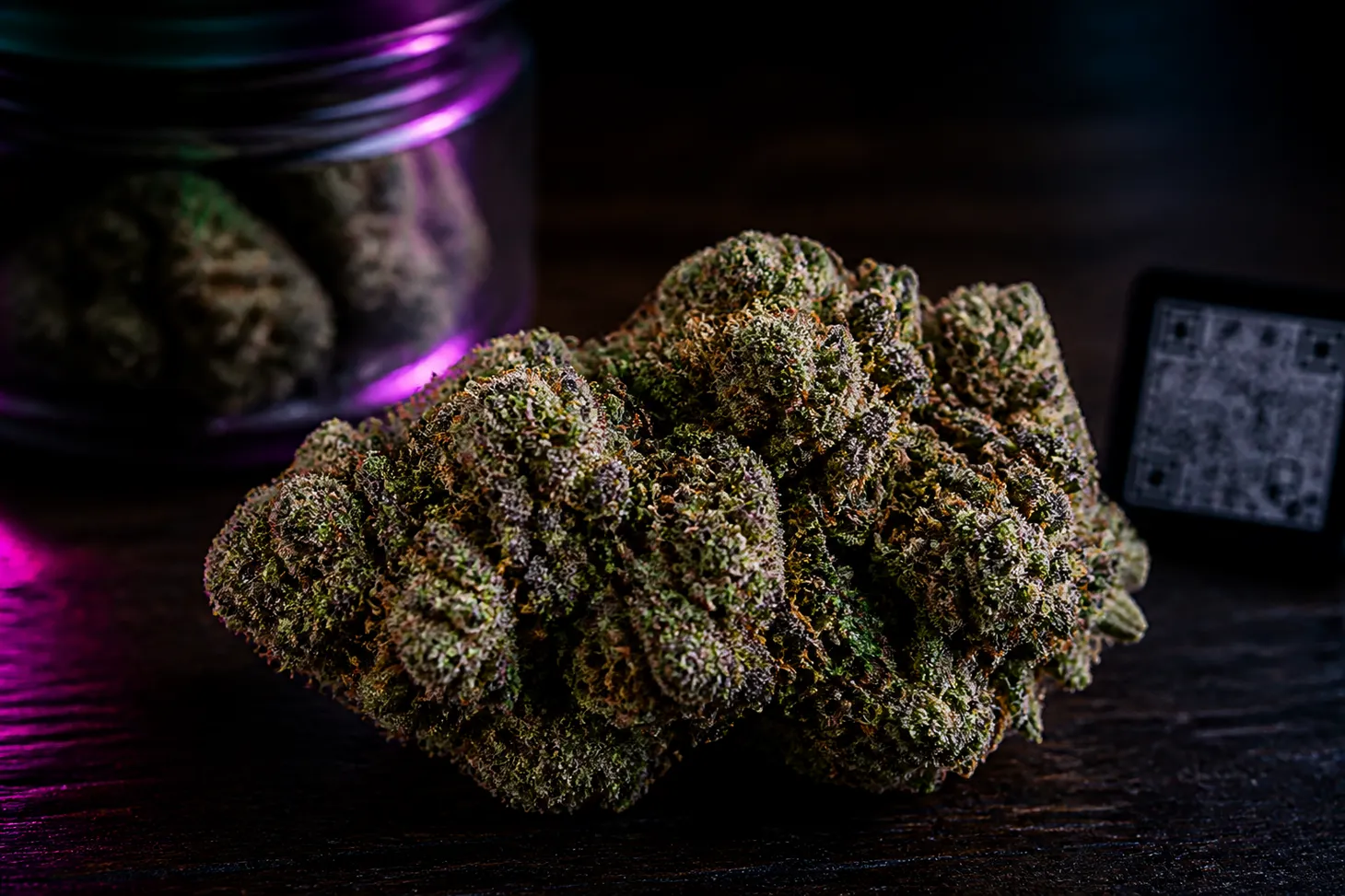
Alien Labs Dark Web is a cannabis flower strain, not a dark web marketplace — a hybrid the brand describes as ‘soothing and relaxing’[1]. Leafly’s winter 2024 review reported one batch at 30.11% THC and 0.07% CBD, priced at $64 per eighth[2]. Before buying, check three things:
What 'Alien Labs Dark Web' Actually Is
'Dark Web' is a cannabis flower strain produced by Alien Labs, not a dark web marketplace or hidden service. The brand describes it as 'a soothing and relaxing hybrid' with a flavour profile that's 'creamy and berry sweet on the pull with an earthy yet smooth exhale and a slightly soapy aftertaste'[1]. If you're searching for this term expecting dark web content, you'll instead find dispensary menus and strain reviews.
Alien Labs operates as part of Connected Cannabis Co., a California-based cultivator known for small-batch indoor flower. The company distributes exclusively through licensed dispensaries in California, Arizona, and medically in Florida[3]. Dark Web sits alongside other Alien Labs strains in the premium flower category, typically packaged in eighth-ounce (3.5 gram) jars with tamper-evident seals and QR codes linking to lab certificates of analysis[4].
Lineage and Chemistry
The official Alien Labs page lists Dark Web's lineage as 'Unknown'[1], but Leafly reported in February 2024 that the strain 'descended from Zoap bagseed obtained by the award-winning Sacramento-based grow'[2]. Leafly's strain database classifies it as a hybrid containing traits of OG Kush, Original Z, and Sherbert[5]. The prominent terpenes are D-Limonene, β-Caryophyllene, and Linalool[1].
Potency varies by batch: Leafly's winter 2024 review documented one batch at 30.11% THC and 0.07% CBD[2], while menu data tracked by WeedDispos shows THC 'most often listed at 27.2–30.3%' across 21 products from 3 brands at 26 licensed dispensaries in 6 cities[6]. Purple Lotus, a licensed San Jose dispensary, lists one batch at 27.36% THC and 0.23% CBD[7].
The name 'Dark Web' reflects Alien Labs' pattern of evocative strain names—similar releases include 'Gemini' and 'Baklava'—not any connection to Tor hidden services or illicit marketplaces. Searches for this term surface cannabis results because the strain name dominates indexed pages, not because the product has any relationship to the dark web.
Strain Profile: Genetics, Terpenes, and Effects
Dark Web's genetic lineage is officially listed as 'Unknown' by Alien Labs[1], though Leafly reported in February 2024 that the strain 'descended from Zoap bagseed obtained by the award-winning Sacramento-based grow at Alien Labs/Connected Cannabis Co.'[2]. Leafly's strain database classifies it as a hybrid containing traits of OG Kush, Original Z, and Sherbert[5]. Insa, a Pennsylvania medical marijuana operator, describes it as an 'Unknown clone-only cultivar'[8]. The lack of documented parentage means you can't predict effects based on a known family tree—each batch's lab results and terpene profile matter more than speculative genetics.
Terpene Profile and Flavour
The official product page lists three prominent terpenes: D-Limonene, β-Caryophyllene, and Linalool[1]. Alien Labs describes the flavour as 'creamy and berry sweet on the pull with an earthy yet smooth exhale and a slightly soapy aftertaste'[1]. Insa's Pennsylvania listing adds 'floral, sweet, slightly spicy profile with subtle vanilla notes'[8]. These descriptors align with the documented terpene mix—D-Limonene contributes citrus brightness, β-Caryophyllene adds peppery spice, and Linalool brings floral smoothness. No public source reports total terpene percentage for Dark Web; the 3.4% figure sometimes cited online does not appear in official Alien Labs or Connected Cannabis Co. documentation.
THC Range and Reported Effects
THC levels vary by batch. Leafly's winter 2024 review documented one batch at 30.11% THC and 0.07% CBD[2], while menu data tracked by WeedDispos shows THC 'most often listed at 27.2–30.3%' across 21 products from 3 brands at 26 licensed dispensaries in 6 cities[6]. Purple Lotus lists one batch at 27.36% THC and 0.23% CBD[7]. Alien Labs describes the effects as 'soothing and relaxing'[1], and Leafly classifies it as a hybrid[5]. WeedDispos notes that menus labelling Dark Web describe it as indica[6], suggesting dispensaries perceive a body-focused effect profile.
Reported effects centre on a relaxing body high with mental clarity—typical of balanced hybrids. You should treat these descriptions as general guidance, not guarantees; individual response depends on tolerance, consumption method, and the specific batch's cannabinoid and terpene ratios. Always check the COA linked via the package QR code for the exact THC percentage and terpene breakdown of your purchase[4].
How to Verify a Legitimate Alien Labs Dark Web Product
Counterfeit Alien Labs products exist because the brand commands premium prices—Leafly reported Dark Web at $64 per eighth in February 2024[2]—and unlicensed sellers exploit that demand with fake packaging. Connected Cannabis Co. states that 'the only way to know for sure if your product is the real deal is to purchase from a licensed dispensary in California, Arizona or Florida'[3]. If you buy outside those channels, you risk receiving untested flower with unknown cannabinoid levels, pesticide residues, or mislabelled THC percentages.
Verification Checklist
Check every package against these markers before purchase:
California cannabis warning symbol: A black-and-white triangle with an exclamation mark, required on all legal California cannabis products[4].
Tamper-evident seal: The jar lid should have an intact seal that shows visible damage if opened[4].
Scannable QR code: The label must include a QR code that links to an official certificate of analysis (COA) showing cannabinoid percentages, terpene profiles, and pass/fail results for pesticides, heavy metals, and microbials[4].
Batch or lot number: The package should display a unique alphanumeric code that matches the COA; this number ties the product to California's METRC track-and-trace system[4].
NorCal Holistics warns that a QR code that 'goes nowhere, leads to a random site, or doesn't show test results that match your exact product' is a major red flag for a counterfeit[4]. If the COA lists a different batch number, strain name, or harvest date than your package, walk away.
Using METRC to Verify Authenticity
California's METRC system tracks every legal cannabis product from cultivation through retail sale. Licensed dispensaries can look up a batch number to confirm the product entered the legal supply chain. You can't access METRC directly as a consumer, but you can ask dispensary staff to verify the batch number on file. If the staff can't or won't check, that's a warning sign—legitimate retailers routinely confirm product authenticity for customers.
Alien Labs products are 'available exclusively in licensed dispensaries'[3], so any seller offering Dark Web outside California, Arizona, or Florida medical dispensaries is selling either grey-market or counterfeit goods. No legal online delivery exists outside these jurisdictions.
Where to Buy: Licensed Dispensaries vs. Gray Market
Connected Cannabis Co. distributes Alien Labs products exclusively through licensed dispensaries in California, Arizona, and medically in Florida[3]. You won't find legitimate Dark Web flower on social media, unlicensed delivery apps, or actual dark web marketplaces—despite the strain name creating search confusion. Any seller outside those three states is offering grey-market or counterfeit products with no lab oversight.
Finding Licensed Retailers
Start with the Alien Labs website's store locator or check Connected Cannabis Co.'s official retailer list[3]. Both tools filter by state and show only licensed dispensaries that carry verified stock. You can also search Weedmaps or Leafly by strain name and filter results to 'licensed' or 'recreational' dispensaries in your area. California's Bureau of Cannabis Control maintains a public database of licensed retailers at cannabis.ca.gov—search by city or license number to confirm a dispensary's legal status before visiting.
Purple Lotus in San Jose, for example, lists Dark Web at 27.36% THC with a scannable COA[7]. WeedDispos tracks 26 licensed dispensaries across 6 cities carrying the strain, with prices ranging from $45 to $70 per eighth depending on batch and location[6]. If a seller quotes significantly lower prices or operates outside California, Arizona, or Florida, treat it as unlicensed.
Why Unlicensed Sources Are Risky
Unlicensed delivery services, Instagram sellers, and dark web vendors bypass mandatory lab testing for pesticides, heavy metals, and microbials. You have no way to verify THC percentage, terpene content, or whether the flower matches the Alien Labs profile at all. Counterfeit packaging is widely available—fake Alien Labs jars with printed labels that mimic the real thing but contain untested flower from unknown growers[4].
Connected Cannabis Co. warns that 'the only way to know for sure if your product is the real deal is to purchase from a licensed dispensary'[3]. Grey-market sellers can't provide METRC batch numbers or official COAs, and their QR codes often link to fabricated test results or dead pages[4]. If you're considering an unlicensed source because of price or convenience, weigh that against the risk of consuming flower with unknown contaminants or wildly inaccurate THC claims.
Licensed dispensaries in California, Arizona, and Florida are the only channels where you can verify authenticity, review lab results, and hold the retailer accountable if something's wrong. No legal workaround exists.
Dosing and Consumption Guidance
If you're new to high-THC indoor flower, start with one inhalation and wait 10–15 minutes before deciding whether to continue. Indoor-grown strains like Dark Web typically deliver more concentrated cannabinoids and terpenes than outdoor or greenhouse flower, so your usual dose may hit harder. Leafly documented one batch at 30.11% THC[2], while menu data shows most batches range from 27.2–30.3%[6]—both figures sit well above the 15–20% THC common in mid-tier flower. That difference means a smaller amount produces the same effect.
Starting Dose for Different Experience Levels
First-time or low-tolerance users: One shallow inhalation, then wait 15 minutes. If you feel nothing, take a second inhalation and wait another 15 minutes. Don't assume you need a full bowl or joint to feel effects.
Moderate users (weekly consumption): Start with half your usual amount. If you typically smoke a 0.5-gram joint of 20% THC flower, try 0.25 grams of Dark Web and assess after 10 minutes.
Daily high-tolerance users: Begin with your standard dose, but expect a stronger body effect due to the Linalool and β-Caryophyllene content[1]. These terpenes amplify relaxation, so you may feel more sedated than with limonene-dominant strains.
Always check the COA linked via your package's QR code[4] for the exact THC percentage of your batch—variance between 27% and 30% changes the intensity noticeably.
Terpene Sensitivity and Consumption Method
Dark Web's prominent terpenes—D-Limonene, β-Caryophyllene, and Linalool[1]—shape both flavour and effect. If you're sensitive to floral or citrus profiles, you may find the 'slightly soapy aftertaste'[1] more pronounced when vaping than smoking. Vaporising at lower temperatures (160–180°C) preserves terpenes but can intensify floral notes; combustion mellows them but reduces overall flavour clarity.
β-Caryophyllene interacts with CB2 receptors, which may enhance the body-relaxing effect reported by users[1][6]. If you've had adverse reactions to peppery or spicy strains in the past—racing heart, anxiety—start with a smaller dose and avoid high-temperature vaping, which concentrates this terpene. Linalool, common in lavender, tends to promote calm; if you're using Dark Web for relaxation or sleep, evening consumption matches the reported indica-leaning effects[6].
Alien Labs describes the strain as 'soothing and relaxing'[1], but individual response varies. If you feel overly sedated or mentally foggy, reduce your dose by half next session and consider pairing consumption with light activity rather than immediate rest.
Common Mistakes When Buying 'Dark Web' Strain
The strain name creates confusion that unlicensed sellers exploit. Buyers searching for 'Dark Web' often encounter grey-market listings, counterfeit packaging, or mislabelled flower from other growers. Each mistake costs you money and puts you at risk of consuming untested cannabis with unknown contaminants or inaccurate THC claims.
Assuming the Name Means It's Sold on Dark Web Markets
The mistake: Searching for Alien Labs Dark Web on .onion marketplaces or encrypted messaging apps, expecting to find legitimate product listings.
Why it's wrong: Dark Web is a cannabis flower strain—'a soothing and relaxing hybrid'[1]—not a dark web marketplace or service. Alien Labs products are 'available exclusively in licensed dispensaries in California, Arizona and medically in Florida'[3]. No legal channel exists on Tor, Telegram, or encrypted markets. Any seller offering Dark Web flower on these platforms is either selling counterfeit goods with fake packaging or untested flower from an unknown source.
Correct action: Use the Alien Labs website store locator or Connected Cannabis Co.'s official retailer list[3] to find licensed dispensaries in California, Arizona, or Florida. Verify the dispensary's license status through your state's cannabis regulator—California's Bureau of Cannabis Control, Arizona's Department of Health Services, or Florida's Office of Medical Marijuana Use. If a seller operates outside these three jurisdictions or refuses to provide a physical storefront address, walk away.
Buying from Unverified Online Sellers
The mistake: Purchasing from Instagram accounts, unlicensed delivery apps, or websites that ship 'discreetly' without asking for medical or recreational ID.
Why it's wrong: Connected Cannabis Co. states that 'the only way to know for sure if your product is the real deal is to purchase from a licensed dispensary'[3]. Unlicensed sellers bypass mandatory lab testing for pesticides, heavy metals, and microbials. You have no way to verify THC percentage—Leafly documented one batch at 30.11% THC[2], but grey-market sellers routinely print inflated numbers on fake labels. Counterfeit Alien Labs packaging is widely available; unlicensed vendors fill authentic-looking jars with untested flower from unknown growers[4].
Correct action: Only buy from licensed dispensaries that verify your age and medical status (where applicable). Check that the package includes a scannable QR code linking to an official COA, a California cannabis warning symbol, and a tamper-evident seal[4]. NorCal Holistics warns that a QR code that 'goes nowhere, leads to a random site, or doesn't show test results that match your exact product' is a major red flag[4]. If the seller can't provide a METRC batch number or refuses to let you scan the QR code before purchase, that's a deal-breaker.
Ignoring Lab Test Dates
The mistake: Buying a jar with a COA dated six months or more before your purchase, assuming cannabinoid percentages remain stable over time.
Why it's wrong: THC degrades into CBN as flower ages, especially if stored in warm or brightly lit conditions. A batch tested at 30% THC in February 2024[2] may measure significantly lower by August if the dispensary didn't store it properly. Terpenes also evaporate—D-Limonene, β-Caryophyllene, and Linalool[1] contribute to Dark Web's 'creamy and berry sweet' flavour[1], but you'll lose that profile if the jar sat on a shelf for months. Old flower tastes harsher and delivers weaker effects than the COA promises.
Correct action: Check the harvest or packaging date on the label and the test date on the COA. Aim for flower packaged within 60–90 days of your purchase. If the dispensary can't tell you when the batch arrived or the jar looks dusty, ask for a fresher batch. Licensed retailers rotate stock regularly—if they don't, shop elsewhere.
Confusing Alien Labs Dark Web with Similarly Named Strains
The mistake: Buying 'Dark Web' flower from a different brand and expecting the same terpene profile, THC range, or effects as Alien Labs' version.
Why it's wrong: WeedDispos tracks 21 Dark Web products from 3 brands across 26 licensed dispensaries[6]. Not all are Alien Labs—other cultivators use the same strain name for unrelated genetics. Alien Labs lists Dark Web's lineage as 'Unknown'[1], though Leafly reported it 'descended from Zoap bagseed'[2]. A different brand's Dark Web may come from entirely different parent strains, with different terpene ratios and effects. Menu data shows THC 'most often listed at 27.2–30.3%'[6], but that range spans multiple growers—only Alien Labs batches carry the D-Limonene, β-Caryophyllene, and Linalool profile[1] that defines the strain's 'soothing and relaxing' character[1].
Correct action: Verify the brand name on the package before purchase. Look for 'Alien Labs' or 'Connected Cannabis Co.' printed on the label, along with the California cannabis warning symbol and a scannable QR code[4]. If the budtender offers 'Dark Web' without specifying the brand, ask to see the jar and check the label. Purple Lotus, for example, lists Alien Labs Dark Web at 27.36% THC[7]—the brand name appears clearly on the menu and package. If the dispensary menu lists only 'Dark Web' with no cultivator, request clarification before buying.
Legal Status and Compliance Considerations
Alien Labs Dark Web is a state-legal cannabis product in California, Arizona, and Florida, where Connected Cannabis Co. holds licenses to sell through regulated dispensaries[3]. If you buy from a licensed retailer in one of those states and consume the product within state borders, you're complying with local law. The moment you cross a state line—even into another legal state—you're committing a federal offence, because cannabis remains a Schedule I controlled substance under the Controlled Substances Act. Interstate transport carries felony penalties regardless of whether both states permit recreational or medical use.
Why the Strain Name Triggers Confusion
The 'Dark Web' label refers to the flower's appearance and lineage—Alien Labs describes it as 'a soothing and relaxing hybrid'[1]—but the name overlaps with terminology for illicit .onion marketplaces and encrypted commerce platforms. That overlap creates two practical problems. First, buyers searching 'Alien Labs Dark Web' online encounter grey-market listings, counterfeit packaging vendors, and scam sites that exploit the ambiguity[4]. Second, if you're stopped by law enforcement while transporting the product, the name on the jar may prompt additional scrutiny even when you're within a legal state.
Connected Cannabis Co. warns that 'the only way to know for sure if your product is the real deal is to purchase from a licensed dispensary'[3], and that guidance doubles as legal protection. A receipt from a licensed retailer, a package with a scannable QR code linking to an official COA[4], and a METRC batch number all serve as proof of legal purchase if questioned. Grey-market sellers can't provide any of those—no receipt, no verifiable lab results, no chain-of-custody documentation.
What to Keep After Purchase
Save your dispensary receipt and photograph the package label, including the QR code, before opening the jar. If the product causes an adverse reaction or you're questioned about possession, those records prove you bought from a licensed source. NorCal Holistics notes that authentic Alien Labs packaging includes 'the California cannabis warning symbol,' tamper-evident seals, and 'a scannable QR code linking to an official COA'[4]. A QR code that 'goes nowhere, leads to a random site, or doesn't show test results that match your exact product' signals a counterfeit[4]—and possession of counterfeit cannabis products can complicate legal standing even in a legal state, because it suggests participation in the grey market.
Don't transport Dark Web flower across state lines, don't share it with anyone in a non-legal state, and don't mail it. Each action converts a legal purchase into a federal crime.
How to Check Current Availability and Pricing
Licensed dispensaries in California, Arizona, and Florida rotate Alien Labs batches every few weeks, so availability changes faster than any printed guide can track. You'll find current stock and pricing by checking online menus on Jane, Leafly, or Weedmaps—each platform aggregates real-time inventory from licensed retailers[3]. Open the menu for a dispensary near you, filter by brand 'Alien Labs', then search for 'Dark Web' in the strain list. If the strain appears, the menu will show the current price, THC percentage, and whether the product is in stock for pickup or delivery.
Leafly reported one batch priced at '$64/eighth' (3.5 grams) in February 2024[2], and WeedDispos tracked menu listings ranging from $40 to $60 per eighth across multiple dispensaries[6]. Use those figures as a benchmark—not a fixed price. Dispensaries adjust pricing based on batch size, local taxes, and demand. A high-THC batch tested above 30%[2] may cost more than a 27% batch from the same grower. If a listing shows Dark Web significantly below $40 per eighth or above $70, verify the brand name on the menu; other cultivators use the same strain name for unrelated genetics[6].
Steps to Verify Stock Before Visiting
Search by location and brand: Enter your city or postcode on Jane, Leafly, or Weedmaps, then filter results by 'Alien Labs'. Not every dispensary carries the full Connected Cannabis Co. catalogue, so this step eliminates retailers that don't stock the brand.
Check the strain name and THC range: Look for 'Dark Web' in the filtered list. Menu data shows THC 'most often listed at 27.2–30.3%'[6]—if a listing claims 35% or higher, contact the dispensary to confirm the batch number and request a photo of the COA.
Note the package date: Some menus display harvest or packaging dates. Aim for flower packaged within 60–90 days of your visit. Terpenes—D-Limonene, β-Caryophyllene, and Linalool[1]—degrade over time, reducing the 'creamy and berry sweet' flavour[1] that defines the strain.
Call ahead for batch details: If the menu shows 'in stock' but no THC percentage or test date, phone the dispensary and ask for the METRC batch number. A licensed retailer will provide it without hesitation; evasive answers suggest grey-market product or mislabelled inventory.
Purple Lotus in San Jose, for example, lists Alien Labs Dark Web at 27.36% THC and 0.23% CBD[7]—the menu includes brand name, cannabinoid percentages, and stock status. That level of detail tells you the dispensary tracks batches properly and can show you the COA on request.
Availability is batch-dependent. A dispensary may sell out of Dark Web within days of a new shipment, then not restock for weeks. If your local retailer shows 'out of stock', check back weekly or sign up for restock alerts on the dispensary's website. Don't buy from unlicensed sellers who claim to have 'exclusive access'—Connected Cannabis Co. states that licensed dispensaries in California, Arizona, and Florida are the only legal channels[3].
Dark Web Verification Checklist: What to Check and Why It Matters
| Verification Point | What to Look For | Where to Find It | Risk Mitigated | Red Flag |
|---|---|---|---|---|
| Brand name | 'Alien Labs' or 'Connected Cannabis Co.' printed clearly | Front label on jar or package | Buying unrelated genetics from different cultivator using same strain name [6] | No brand name, generic 'Dark Web' label, or unfamiliar company |
| California warning symbol | Triangle with exclamation mark and state-mandated text | Package label (required by law) | Counterfeit packaging from grey-market sellers [4] | Missing symbol or non-standard warning text |
| Tamper-evident seal | Intact seal that breaks on first opening | Jar lid or package closure | Repackaged or contaminated product [4] | Broken seal, missing seal, or easily removable tape |
| Scannable QR code | Code links to official COA matching your batch number | Package label or insert card | Fake lab results or untested flower [4] | QR goes nowhere, leads to random site, or shows mismatched test results [4] |
| METRC batch number | Alphanumeric code tracking product from cultivation to sale | Package label (California track-and-trace system) | Grey-market product with no legal chain of custody | Dispensary refuses to provide batch number or claims 'system is down' |
| THC percentage | 27.2–30.3% range across licensed batches [2][6][7] | COA and package label | Inflated claims or degraded old stock | Claims above 35% or no test date on COA |
| Terpene profile | D-Limonene, β-Caryophyllene, Linalool listed [1] | COA (not always on package label) | Wrong strain or mislabelled product | COA lists completely different terpenes or no terpene data |
| Package/test date | Packaged within 60–90 days of purchase | Package label and COA date stamp | Degraded cannabinoids and evaporated terpenes | Test date 6+ months old or no date visible |
| Licensed retailer | Dispensary holds valid state licence (CA, AZ, FL) [3] | State cannabis regulator website or dispensary storefront | Federal crime (unlicensed sale) and untested product [3] | Seller operates without storefront, refuses age verification, or ships across state lines |
Typical Mistakes and Misconceptions
Assuming ‘Dark Web’ refers to an actual dark web marketplace
The strain’s name creates immediate confusion for anyone searching online. Alien Labs describes Dark Web as ‘a soothing and relaxing hybrid’[1], a cannabis flower with no connection to encrypted commerce platforms or .onion sites. When you search ‘Alien Labs Dark Web’, results mix legitimate strain information with grey-market listings and counterfeit packaging vendors that exploit the name overlap[4]. Treat every search result with skepticism: if a site offers to ship Dark Web flower to a non-legal state or through an anonymous payment method, you’re looking at an illicit seller, not a licensed dispensary.
Believing every ‘Dark Web’ on a menu is the Alien Labs strain
Multiple brands grow unrelated genetics under the same strain name. Leafly reported that Alien Labs Dark Web is ‘descended from Zoap bagseed’[2], but a different cultivator’s Dark Web may come from entirely different parent strains with different terpene ratios and effects[6]. Menu data shows THC ‘most often listed at 27.2–30.3%’[6], but that range spans multiple growers—only Alien Labs batches carry the D-Limonene, β-Caryophyllene, and Linalool profile[1] that defines the strain’s character. Check the brand name on the package before purchase, and if the menu lists only ‘Dark Web’ with no cultivator, ask the budtender to show you the jar.
Trusting a QR code without verifying where it leads
Counterfeiters now print fake QR codes on packaging to mimic authentic Alien Labs products. NorCal Holistics warns that a QR code that ‘goes nowhere, leads to a random site, or doesn’t show test results that match your exact product’ is a major red flag[4]. Scanning the code should take you to an official certificate of analysis (COA) with batch-specific test results. If the COA shows a different THC percentage than the label, or lists terpenes that don’t match D-Limonene, β-Caryophyllene, and Linalool[1], the product is likely counterfeit or mislabelled.
Assuming high THC means better quality or authenticity
A batch tested at 30.11% THC[2] doesn’t automatically outperform one at 27.36%[7]. Terpene content, harvest date, and curing quality affect the experience as much as THC percentage, and counterfeiters often inflate THC numbers to attract buyers. Menu data shows legitimate Alien Labs Dark Web batches ‘most often listed at 27.2–30.3%’[6]—if a listing claims 35% or higher, request the batch number and COA before purchasing. The strain’s ‘creamy and berry sweet’ flavor[1] comes from its terpene profile, not from a higher THC figure.
Thinking you can buy Dark Web legally from any online seller
Connected Cannabis Co. states its products are ‘available exclusively in licensed dispensaries in California, Arizona and medically in Florida’[3]. Any website or social media account offering Alien Labs Dark Web for shipment outside those states is operating illegally, and buying from such a source exposes you to federal trafficking charges. The company’s FAQ confirms that ‘the only way to know for sure if your product is the real deal is to purchase from a licensed dispensary’[3]. If a seller won’t provide a METRC batch number, a physical storefront address, or age verification, walk away.
Assuming the strain’s availability is stable and predictable
Alien Labs releases Dark Web in limited batches, and dispensaries sell through inventory quickly. Leafly reported one batch priced at ‘$64/eighth’ and hitting stores by February 16, 2024[2], but that doesn’t mean your local retailer will have it next week. Menu data tracked by WeedDispos shows listings across 26 licensed dispensaries[6], yet stock rotates constantly. Check your dispensary’s online menu before visiting, and if Dark Web is out of stock, sign up for restock alerts rather than turning to unlicensed sources that claim to have it available.
Common questions
Is Alien Labs Dark Web a real dark web marketplace?
No. Alien Labs' official product page describes Dark Web as a cannabis flower strain—'a soothing and relaxing hybrid'—not a marketplace or encrypted commerce platform[1]. The name refers to the strain's genetics and branding, not to .onion sites or anonymous trading. Any website offering Alien Labs Dark Web for shipment outside licensed states is an illicit seller exploiting the name overlap[3].
What are the genetics of Alien Labs Dark Web strain?
Alien Labs lists the lineage as 'Unknown' on its official page[1], but Leafly reported in February 2024 that Dark Web is 'descended from Zoap bagseed obtained by the award-winning Sacramento-based grow at Alien Labs/Connected Cannabis Co.'[2]. Leafly's strain database also notes traits of OG Kush, Original Z, and Sherbert[5]. Insa, a Pennsylvania operator, describes it as an 'Unknown clone-only cultivar'[8].
What does Alien Labs Dark Web taste like?
Alien Labs describes the flavor as 'creamy and berry sweet on the pull with an earthy yet smooth exhale and a slightly soapy aftertaste'[1]. The profile comes from its dominant terpenes: D-Limonene, β-Caryophyllene, and Linalool[1]. Insa adds that the strain has a floral, sweet, slightly spicy profile with subtle vanilla notes[8].
Bottom Line
Verify the brand before you buy. Multiple cultivators sell flower called ‘Dark Web’, but only Alien Labs batches carry the D-Limonene, β-Caryophyllene, and Linalool profile[1]. Check the jar label for ‘Alien Labs’ or ‘Connected Cannabis Co.’ before paying.
Match the THC range. Legitimate batches most often list 27.2–30.3% THC[6]. Anything above 35% or without a test date is a red flag—request the METRC batch number and COA.
Inspect the packaging. A California warning symbol, intact tamper-evident seal, and a QR code that opens a batch-specific COA are the minimum checks[4]. A broken seal or dead QR link means walk away.
Buy only from licensed dispensaries. Connected Cannabis Co. sells exclusively through state-licensed retailers in California, Arizona, and Florida[3]. Online sellers shipping elsewhere are operating illegally.
Check stock before you travel. Availability is batch-dependent, and dispensaries sell out within days. Sign up for restock alerts instead of chasing unlicensed sellers.
Start with the label: confirm the brand, scan the QR code, and compare the THC figure against the 27.2–30.3% range before you hand over cash. If you’re still learning how to separate licensed menus from grey-market listings, our guide to Dark Web Websites Reddit: A Comprehensive Guide walks through the same verification habits for any strain search.
Explore More About Cannabis Strains
Discover additional insights and resources on cannabis strains.
View More ArticlesWorks cited
- 1
- Dark Web | Alien Labs
- 2
- Dark Web—Alien Labs, CA, winter 2024 | Leafly
- 3
- Connected Cannabis Co
- 4
- Alien Labs Disposable Real vs Fake (and How to Spot Authentic Devices) - NorCal Holistics
- 5
- Dark Web Weed Strain Information | Leafly
- 6
- Dark Web Strain | WeedDispos
- 7
- Dark Web | Alien Labs | Cannabis Strain - Purple Lotus
- 8
- Alien Labs Lands In PA Medical Marijuana Market - Insa
Where to look next
We collect these links for readers who want to compare options. Verified links.
 The Hidden Wiki: Your Guide to the Dark Web's DirectoryDiscover what The Hidden Wiki is and how it serves as a directory for dark web resources, helping you navigate safely.
 Essential Dark Web Links: Your Guide to Safe BrowsingDiscover essential dark web links for safe browsing. Navigate verified .onion directories and avoid scams with our practical guide.
 Dark Web Link Reddit: Finding Reliable SourcesDiscover reliable dark web links on Reddit to navigate safely and avoid scams. Get tips for finding trustworthy sources and staying secure.